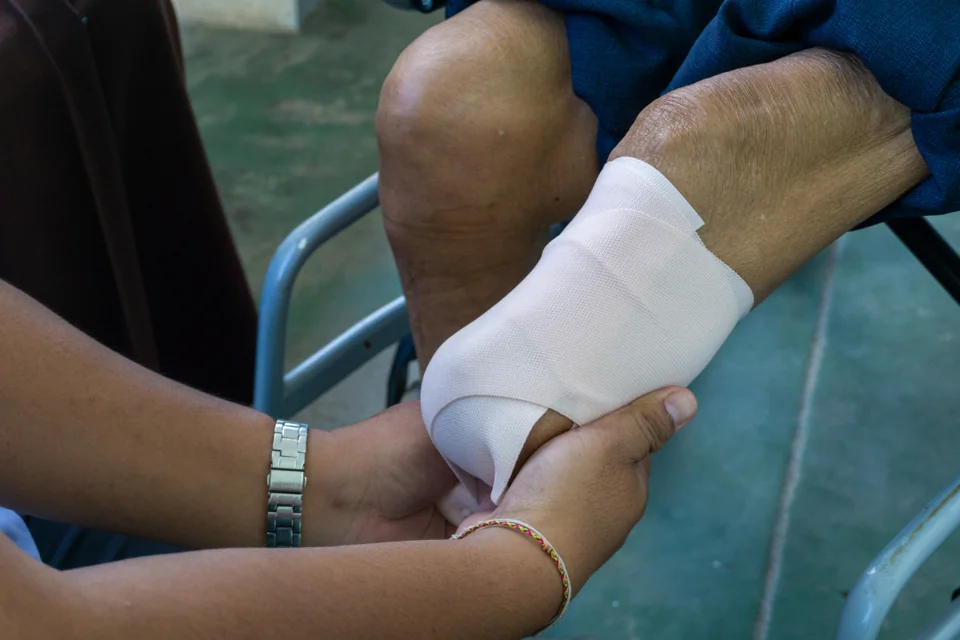
An amputation claim cannot be evaluated accurately by adding together the first hospital bills and the wages missed during the initial recovery.
The loss of a hand, arm, foot, leg, finger, or toe can affect mobility, employment, independence, family responsibilities, mental health, and medical needs for decades.
Those long-term effects may not be clear immediately after the accident. That is why accepting a settlement before the person's future needs are properly evaluated can result in a recovery that does not reflect the full impact of the injury.
The Medical Outcome May Still Be Developing
An amputation may occur at the accident scene, during emergency surgery, or later when doctors determine that a severely damaged limb cannot be saved.
Even after the surgery, important medical questions may remain:
Will additional surgery be necessary?
How will the residual limb heal?
Will the person develop an infection?
Can the person use a prosthesis?
What type of prosthesis is appropriate?
How much physical or occupational therapy will be required?
Will the person experience residual-limb or phantom-limb pain?
Can the person return to the same occupation?
What assistance will be needed at home?
The Department of Veterans Affairs describes amputation rehabilitation as a continuing, interdisciplinary process that may involve physicians, surgeons, therapists, prosthetists, psychologists, social workers, and other specialists.
A claim should not be finalized before the medical team has had a reasonable opportunity to understand the person's functional abilities and future care.
Prosthetic Care Is Not a One-Time Expense
The need for a prosthesis depends on the location and level of the amputation, the person's health, functional goals, occupation, activity level, and medical condition.
Prosthetic care may involve:
Initial evaluation
Temporary or preparatory devices
Socket fitting and adjustments
A permanent prosthesis
Component changes
Repairs and maintenance
Replacement devices
Physical or occupational therapy
Training for work and daily activities
The first device may not be the device the person ultimately uses. Changes in the residual limb, comfort, mobility, work requirements, or available technology may require later adjustments or different components.
A future-care analysis should therefore be based on recommendations from treating doctors, rehabilitation professionals, and qualified prosthetic specialists—not on an unsupported online estimate.
Pain May Continue After the Wound Heals
Post-amputation pain can take different forms.
Phantom-limb pain is pain or discomfort perceived in a limb that is no longer present. Residual-limb pain originates in the remaining portion of the limb and may be connected to issues such as nerve injury, skin breakdown, infection, or problems with prosthetic fit.
These are distinct medical conditions and may require different forms of evaluation and treatment.
Pain can also affect sleep, concentration, mobility, prosthetic use, mood, and the person's ability to work. Any future treatment for chronic pain should be supported by the medical evidence and recommendations of qualified providers.
Future Medical Expenses Must Be Considered
New Jersey's model civil jury instructions recognize that an injured person may seek compensation for future medical expenses caused by another party's wrongdoing.
Future medical needs in an amputation case may include:
Additional surgery
Prosthetic care
Physical therapy
Occupational therapy
Pain management
Psychological treatment
Medication
Mobility aids
Wheelchairs
Home healthcare
Transportation assistance
Treatment for complications
Future expenses should be supported by evidence showing the type of treatment likely to be needed, its anticipated cost, and how long the need is expected to continue.
This often requires medical testimony and, in significant cases, a life-care plan.
Lost Income Is More Than Time Away From Work
The financial effect of an amputation may continue long after the person returns home from the hospital.
The injured person may:
Miss work during surgery and rehabilitation
Return with reduced hours
Need a different position
Require workplace accommodations
Lose overtime opportunities
Be unable to perform physical duties
Need vocational retraining
Earn less in a different career
Be unable to return to employment
New Jersey's model civil jury instructions separately address past lost earnings and future loss of earning capacity.
A future-income analysis may require employment records, tax documents, medical restrictions, vocational evidence, and economic projections.
The person's age, education, occupation, work history, skills, and expected career path may all be relevant.
The Human Impact Also Matters
Medical expenses and income records do not fully describe what it means to lose a limb.
New Jersey recognizes damages involving pain and suffering, disability, impairment, and loss of enjoyment of life. The state's model jury instructions explain that there is no fixed table or mathematical formula for calculating these losses.
The evaluation may consider how the injury affects:
Walking and mobility
Personal care
Driving
Household responsibilities
Parenting
Exercise and recreation
Social activities
Sleep
Independence
Physical appearance
Emotional well-being
The purpose is not to assign an automatic value to the loss of a particular limb. It is to document how the injury has affected this particular person.
Liability and Insurance Still Affect the Claim
A severe injury does not eliminate the need to prove legal responsibility.
The investigation must establish:
Who caused the accident
What unsafe conduct occurred
Whether more than one party was responsible
Whether the injured person shared any responsibility
Which insurance policies apply
Whether the case involves an employer, contractor, manufacturer, driver, property owner, or another defendant
An amputation may result from a construction accident, industrial machine, defective product, truck collision, motorcycle accident, electrical injury, or another event.
The cause of the injury determines which evidence must be preserved and which parties may be legally responsible.
Evidence Needed to Evaluate the Claim
A carefully prepared claim may include:
Surgical and hospital records
Photographs of the injury and recovery
Prosthetic evaluations
Therapy records
Employment and income documents
Medical bills
Future-treatment recommendations
Accident photographs or video
Equipment and maintenance records
Witness statements
Expert reports
A journal documenting daily limitations
The evidence should show both how the accident happened and how the amputation has changed the person’s life.
Talk With a New Jersey Amputation Injury Lawyer
An amputation settlement should account for the person's future—not only the expenses already incurred.
Pinnacle Injury Law can investigate responsibility, preserve accident evidence, review applicable insurance coverage, and work with appropriate medical, vocational, prosthetic, and financial professionals to evaluate the long-term effects of the injury.
Case reviews are free, and there is no fee unless we win.
Sources and Resource Links
- Pinnacle Injury Law: New Jersey Amputation Injury Lawyers
- New Jersey Courts: Future Medical Expenses—Model Civil Jury Charge 8.11I
- New Jersey Courts: Disability, Impairment, Pain and Loss of Enjoyment—Charge 8.11E
- New Jersey Courts: Loss of Earnings—Model Civil Jury Charge 8.11C
- New Jersey Courts: Model Civil Jury Charges System
- U.S. Department of Veterans Affairs: Amputation System of Care
- VA/DoD Clinical Practice Guideline for Lower-Limb Amputation Rehabilitation
- National Library of Medicine: Phantom Limb Pain
This article provides general information about New Jersey amputation injury claims and is not legal advice. Every claim depends on its medical evidence, responsible parties, insurance coverage, and individual circumstances.